


QE-1325 X-TUBE XT25 Hoparlör Kablosu / Metre Fiyatı (uçlar hariç)


QE-1325 X-TUBE XT25 Hoparlör Kablosu
BANANA DAHİL DEĞİLDİR !
Performance XT25
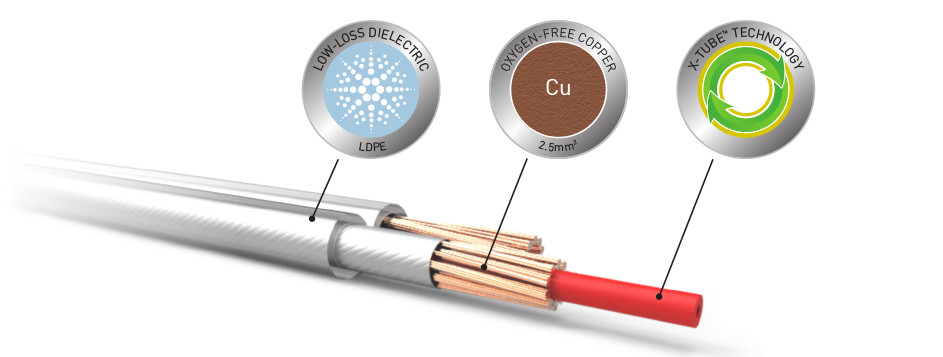
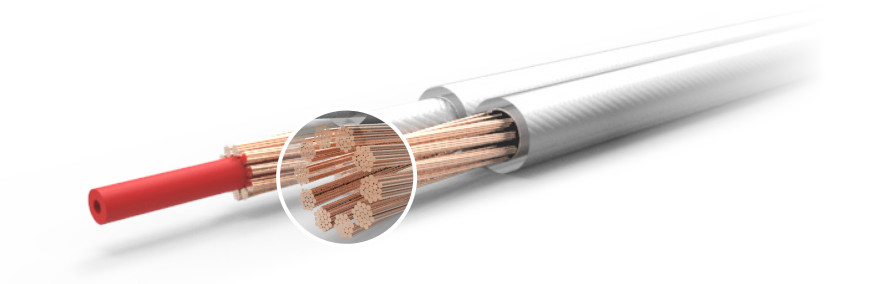
XT25 ile, mevcut Aircore™ ve X-Tube™ teknolojilerimizi yeni bir X-Tube™ değişimlerinde birleştirerek yakınlık etkilerini ve yüzey efektlerini elden çıkarın. İletkenleri içi boş bir tüp şekline dönüştürülerek, yüzey etkisine dahil edilen elektrik iletken iletken malzemenin çıkarıldığı iletkenin hızla doğru etki etmesi sayesinde daha yüksek frekanslarda akım yayılmaları korunmaktadır.
X-Tube™ teknolojisi ilk olarak 2005 yılında, dünyanın en saygın orta frekans kablosu olan ve üç yıl üst üste What Hi-Fi Yılın Ürünü ödülünü kazanan dünyaca ünlü Silver Anniversary XT'nin piyasaya sürülmesiyle öne çıktı. Bu tasarım prensipleri, çok sayıda ödül kazanan XT40 hoparlör kablosu ve XT25'te de yer almaktadır.
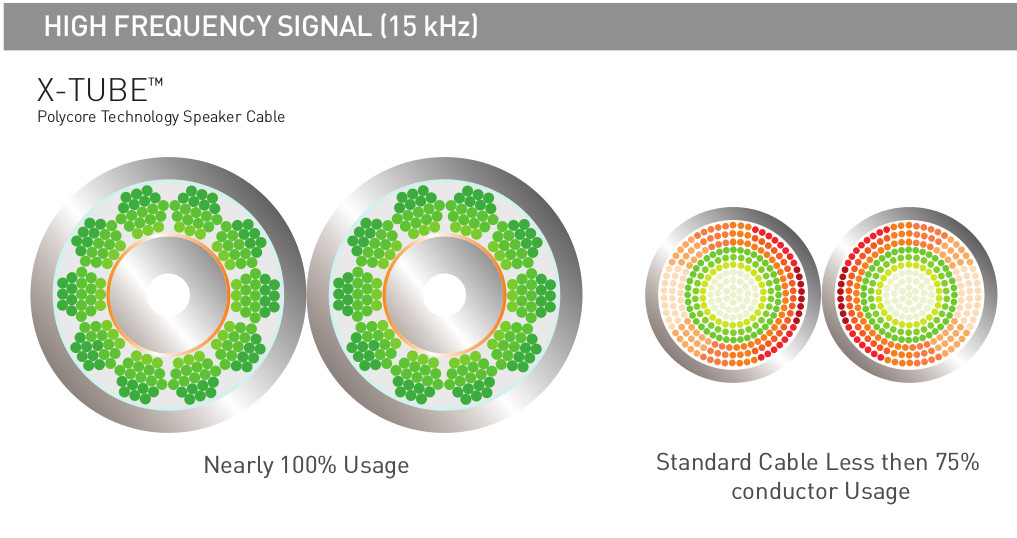
Frekans arttıkça, elektronlar iletkenin çevresine doğru daha fazla akar, böylece frekans yeterince yüksekse iletkenin dış yüzeyinde yalnızca çok ince bir tabaka (veya zar) kullanılır. Bu "zar derinliği", sabit bir frekansta farklı malzemeler için değişir ve bakırda, bir iletkenin kesit alanı 0,66 mm²'den büyükse, bu alanın tamamının analog müzik sinyali tarafından kullanılamayacağı anlamına gelir. SAXT'te, iletken malzemenin tamamını merkezi içi boş bir yalıtım çubuğunun etrafına yerleştirerek çalışan X-Tube™ Teknolojisi kullanılarak "zar etkisi" sorunu etkili bir şekilde ortadan kaldırılmıştır. Ancak, alternatif akım sinyalleri için, akım akışı tarafından oluşturulan değişen manyetik alanlar, yakındaki iletkenlerde girdap akımları oluşturur; bu da akımın yalnızca aynı yönde akım taşıyan iletkenlerden en uzak bölgelerde akmasına ve bunun tersine de neden olur.
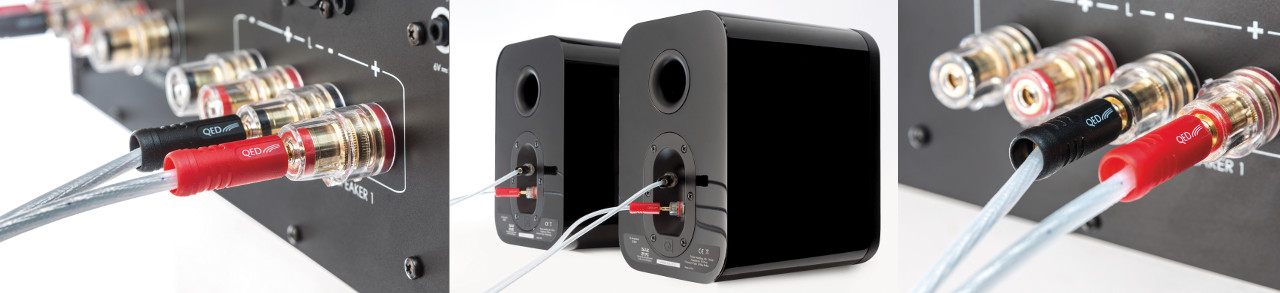
Fabrikada önceden sonlandırılmış olarak tedarik edildiğinde, Airloc Isı Büzüşmeli 4 mm Muz Fişleri ile donatılmıştır.
ÖZELLİKLER VE AVANTAJLAR
X-Tube™ Teknolojisi... ama farklı bir yaklaşımla.
Hoparlör kablolarında yüksek frekanslı sesler iletkenin dışına doğru hareket etmeye zorlanır ve bu nedenle frekans arttıkça mevcut kesit alanının giderek daha azını kullanabilirler. Buna "Deri Etkisi" denir. Bu, yüksek frekanslar için kablonun direncinin, düşük frekanslı seslere göre çok daha yüksek görünmesi anlamına gelir. Bir iletkendeki girdap akımları, bitişik bir iletkende akan akımı etkileyebilir, böylece aynı yönde akan akımlar birbirinden uzaklaşır. Bu "Yakınlık Etkisi" de frekans arttıkça direnci artırır. Bu olaylar, duyduğunuz sesin doğruluğunu olumsuz etkiler. QED X-Tube™ Teknolojisinin XT25 varyasyonu, geleneksel katı veya çok telli iletkenlere kıyasla her frekansın eşit kolaylıkla geçebileceği, ayrı iletken demetlerinden oluşan içi boş boru şeklinde bir iletken geometrisi oluşturarak bu sorunları çözer.
Düşük Kayıplı Dielektrik
Hoparlör kablosundaki müzik sinyalleri her saniyede birçok kez ileri geri hareket eder. Gönderici ve geri dönüş iletkenlerini birbirinden ayıran yalıtım malzemesi (dielektrik), her seferinde şarj edilmeli ve deşarj edilmelidir. Her şarj döngüsü sırasında dielektrikte depolanan enerjinin tamamı, her deşarj döngüsü sırasında tamamen geri dönmez; bu da duyduğunuz sesin kalitesini olumsuz etkiler. Bu nedenle QED olarak, kalitesiz markasız kablolarda bulunan daha ucuz PVC alternatifleri yerine Polietilen (PE) veya Teflon™ (PTFE) gibi düşük kayıplı dielektrik malzemeler kullanıyoruz.
Düşük Kayıplı Dielektrik
Hoparlör kablosundaki müzik sinyalleri her saniyede birçok kez ileri geri hareket eder. Gönderici ve geri dönüş iletkenlerini birbirinden ayıran yalıtım malzemesi (dielektrik), her seferinde şarj edilmeli ve deşarj edilmelidir. Her şarj döngüsü sırasında dielektrikte depolanan enerjinin tamamı, her deşarj döngüsü sırasında tamamen geri dönmez; bu da duyduğunuz sesin kalitesini olumsuz etkiler. Bu nedenle QED olarak, kalitesiz markasız kablolarda bulunan daha ucuz PVC alternatifleri yerine Polietilen (PE) veya Teflon™ (PTFE) gibi düşük kayıplı dielektrik malzemeler kullanıyoruz.
ÖZELLİKLER
Performance XT25 (Pair)
With XT25 we tackle the proximity effect and the skin effect by combining our existing Aircore™ and X-Tube™ Technologies into a new X-Tube™ variation. By forming the conductors into a tube-like shape with a hollow centre, current densities at higher frequencies are maintained because the electric field which contributes towards the skin effect acts towards the centre of the conductor from where the conductive material has been removed.
X-Tube™ technology first came to prominence in 2005 with the launch of the world renowned Silver Anniversary XT, the most highly regarded mid-range cable in the world, winning the What Hi-Fi Product of the Year three years in a row. These design principles also grace the multiple award winning XT40 speaker cable and XT25.
As frequency increases, electrons flow more and more towards the periphery of a conductor so that if the frequency is high enough only a very thin layer (or skin) on the outside of the conductor is used. This “skin depth” varies for different materials at a fixed frequency and in copper it means that if a conductor has larger than 0.66 mm² cross-sectional area not all of that area is available for an analogue music signal to use. In SAXT the “skin effect” problem was effectively eliminated by the use of X-Tube™ Technology which works by placing all of the conducting material around a central hollow insulating rod. However, for a.c. signals, changing magnetic fields generated by the flow of current set up eddy currents in nearby conductors which force current to flow only in areas furthest away from conductors carrying current in the same direction and vice versa.
When supplied factory pre-terminated this is fitted with Airloc Heat Shrink 4mm Banana Plugs.
"Offering a sense of clarity in terms of midrange performance, with a low noise expression that aided both transparency but also tonal accuracy, the XT25 cables bring a sense of hi-fi luxury at a low price."
The Audiophile Man, Deeply Groovy Award"We know QED for sensational levels of clarity and detail, and, even at this lower price, it doesn’t disappoint. This kind of transparency is difficult for rivals to match"
What Hi-Fi?, 5 StarsFEATURES AND BENEFITS
X-Tube™ Technology....but with a twist
In loudspeaker cables high pitched sounds are forced to travel towards the outside of the conductor and so are able to use less and less of the available cross-sectional area as the pitch increases. This is called the “Skin Effect”. It means that for high frequencies the resistance of the cable appears to be much higher than it does for lower pitched sounds. Eddy currents in one conductor can affect the current flowing in an adjacent conductor so that currents flowing in the same direction move away from each other. This “Proximity Effect” also increases resistance as frequency increases. These phenomena have a detrimental effect on the fidelity of the sound you hear. The XT25 variation of QED X-Tube™ Technology solves these problems by creating a hollow tubular conductor geometry out of individual conductor bunches through which each frequency can pass with equal ease when compared to traditional solid or stranded conductors.
Low-Loss Dielectric
Music signals in a loudspeaker cable move back and forth many times every second. The insulating material used to separate the send and return conductors from each other (the dielectric) has to be charged and discharged every time. Not all of the energy stored in the dielectric during each charge cycle is completely returned during each discharge cycle which has a detrimental effect on the fidelity of the sound you hear. That’s why at QED we use low-loss dielectric materials such as Polyethylene (PE) or Teflon™ (PTFE) in preference to cheaper PVC alternatives found in inferior unbranded cables.
Low-Loss Dielectric
Music signals in a loudspeaker cable move back and forth many times every second. The insulating material used to separate the send and return conductors from each other (the dielectric) has to be charged and discharged every time. Not all of the energy stored in the dielectric during each charge cycle is completely returned during each discharge cycle which has a detrimental effect on the fidelity of the sound you hear. That’s why at QED we use low-loss dielectric materials such as Polyethylene (PE) or Teflon™ (PTFE) in preference to cheaper PVC alternatives found in inferior unbranded cables.